The technology behind ecoPi
Solid hardware & finely tuned software
Monitoring with ecoPi means: autonomous operation. Modular sensors. Long-term recordings. On-device AI analysis. Remote access. Clear data platform. Verifiable data.
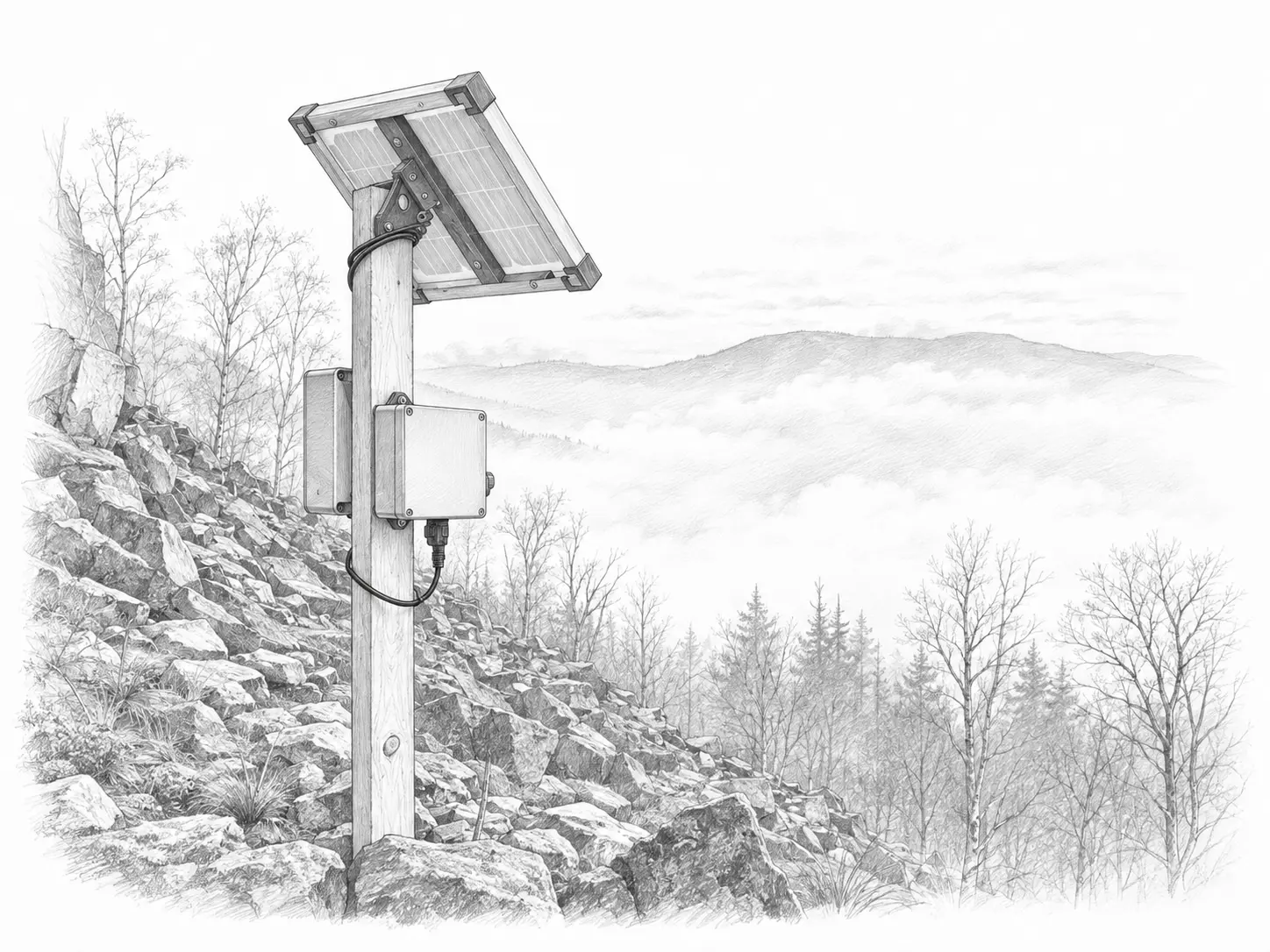
Autonomous and rugged
Solar panels and lithium-ion batteries support operation for weeks or months without on-site maintenance. The rugged enclosure protects the electronics during field deployment.
Scalable power supply
The power system combines lithium-ion batteries with solar panels. Both can be adapted to site conditions and project duration, from a few weeks to several months of continuous operation.
Energy-Saving Duty Cycles
The system wakes only during scheduled recording periods and remains inactive between sessions, reducing energy consumption and extending possible runtime.
Protective enclosure
The rugged enclosure protects the electronics from direct exposure to rain, dust, and weather, making it ideally suited for outdoor deployment.
Modular Sensors
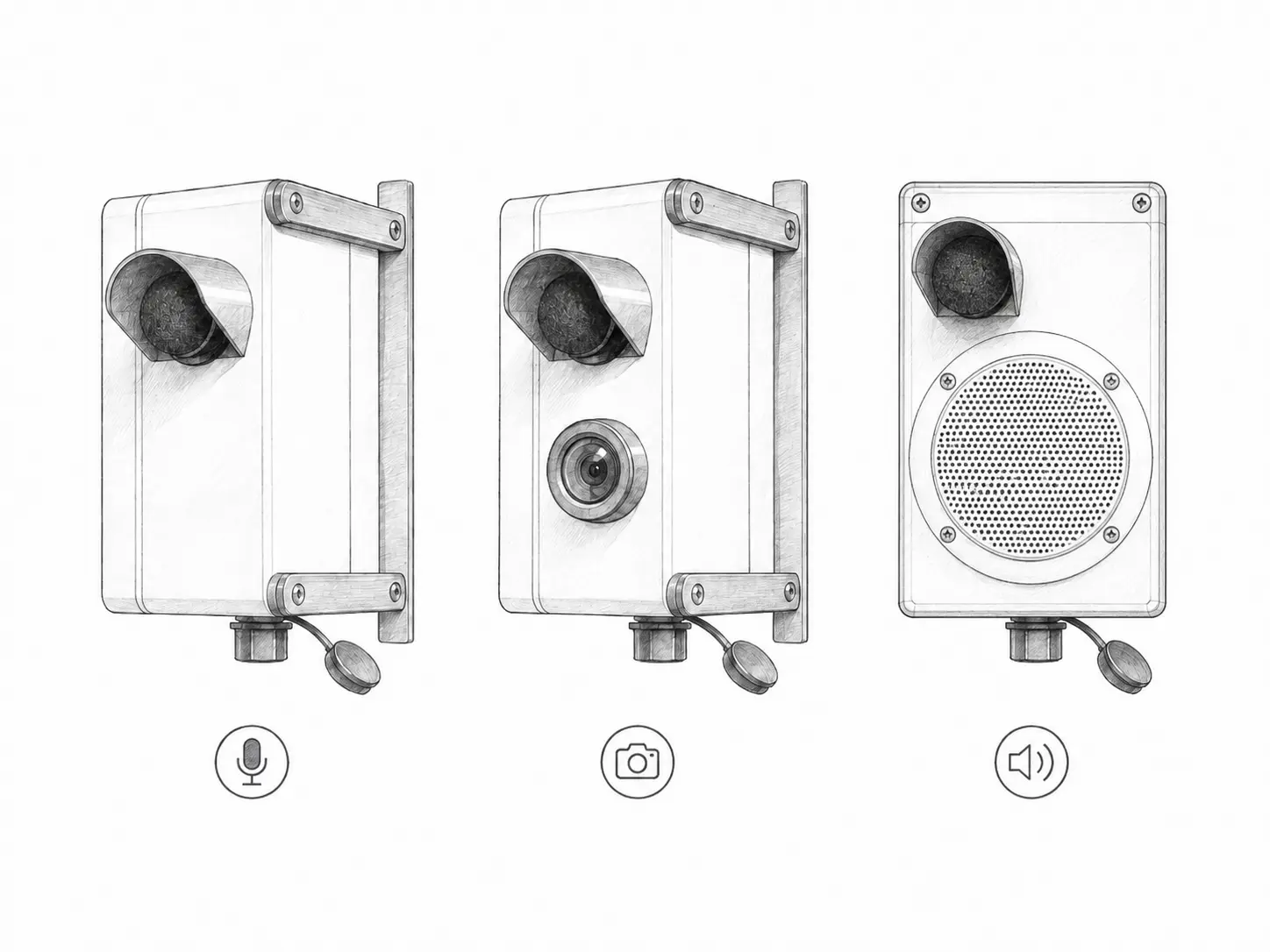
Depending on project requirements, the ecoPi can be extended with other sensors – e.g. camera, speaker, or sensors for abiotic parameters such as temperature and humidity.
Flexible Sensor Configuration
The ecoPi is based on a Raspberry Pi platform and can be extended modularly: microphone, camera, speaker, or sensors for temperature and humidity – combinable as needed.
Project-specific setup
Sensor configuration and recording settings are individually tailored to your research question, target species, and habitats – so the same core platform supports a wide range of ecological projects.
Custom Extensibility
The modular architecture of the ecoPi system makes it easy to flexibly integrate new extensions. Does your project need a specific type of sensor? We're happy to develop custom extensions with you!
High-quality components
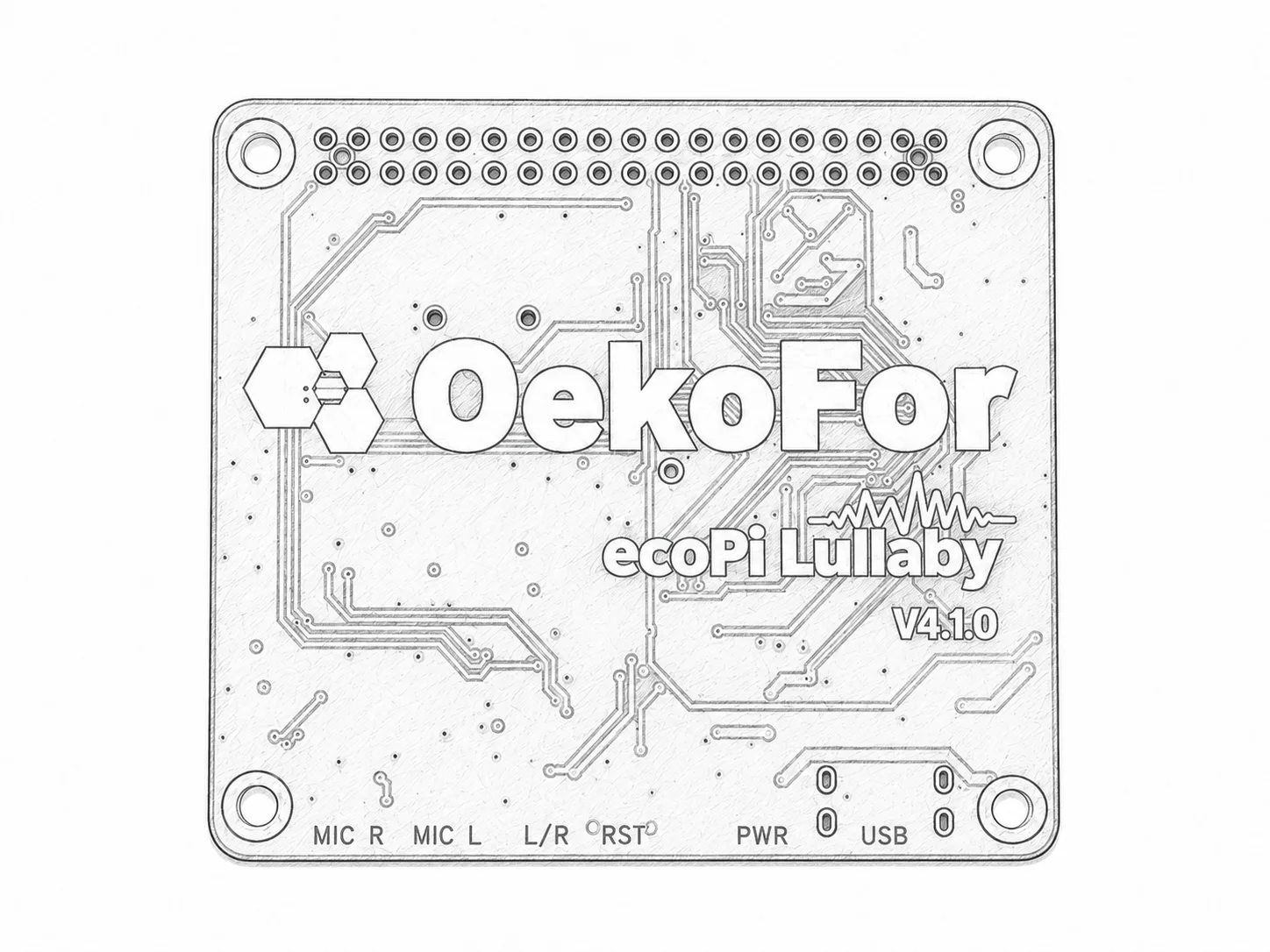
A custom-developed board for power management and audio capture delivers low-noise data at field quality.
Custom board for audio and power management
A custom-developed board controls duty cycles and audio capture separately from one another – enabling precise control of both functions.
Low-noise audio recordings
A high-quality analog-to-digital converter delivers detailed, low-noise recordings. A hardware high-pass filter already reduces noise from wind or vibration at the hardware level – for better results in both AI analysis and manual review.
Field-ready quality
All components are designed for continuous field operation – stable power supply and rugged electronics ensure consistently high data quality throughout the entire deployment period.
On-device AI
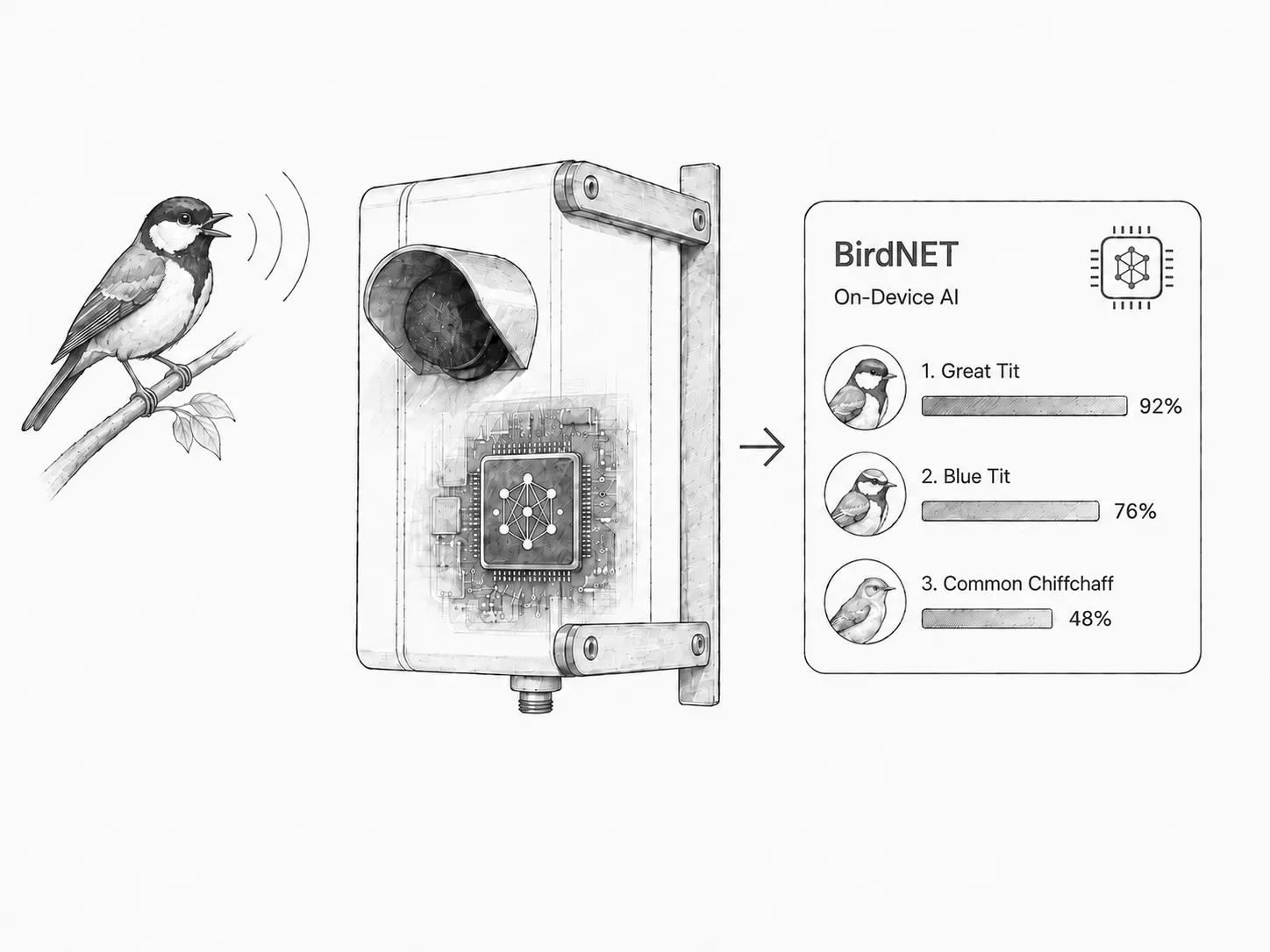
AI models run directly on the recorder. Species are identified on site, and only relevant results are transmitted.
Recognition on the device
AI models analyze recordings directly on the ecoPi. Detections are automatically identified and stored with species, time, and confidence score. Because processing happens locally, full audio data don't need to be transmitted – saving bandwidth and energy.
Replaceable models
By default, ecoPi runs the current BirdNET model, but it can be exchanged or updated at any time – including with custom-trained models for other species groups. The switch happens via mobile connectivity, without physical access to the device.
Audio archive
The raw audio data is stored in full (FLAC format) and remains available later for re-analysis with updated or extended AI models.
Software Configuration & Management
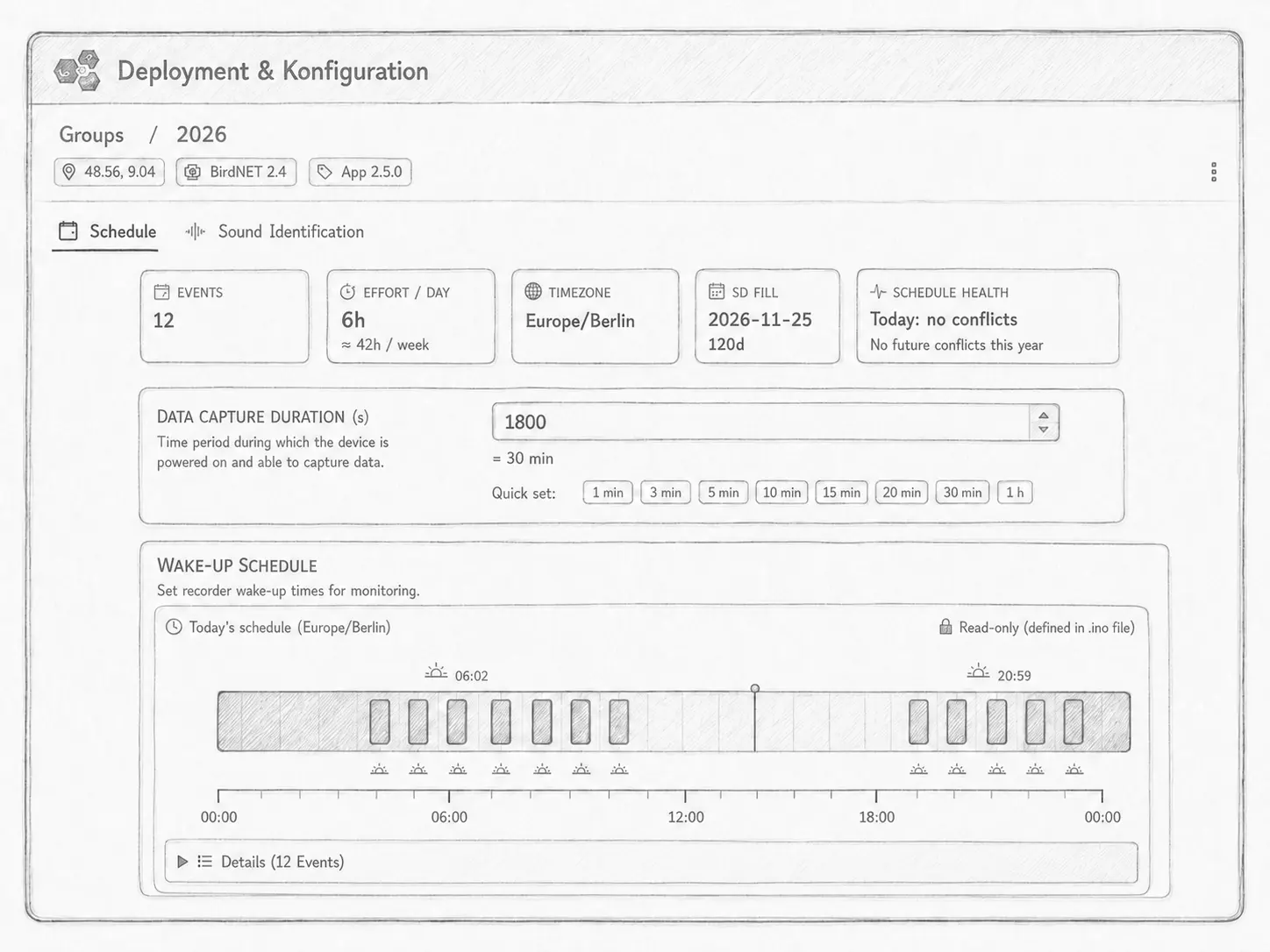
Recording schedules, target species lists, and detection parameters are configured flexibly via web interfaces – before or during field deployment.
Flexible project configuration
Recording parameters such as intervals, active hours, target species lists, detection thresholds, and AI models are set via a web interface – before deployment or at any time during operation via mobile connectivity, without an on-site visit.
Fleet management
In projects with multiple sites, configurations, software updates, and model changes can be managed centrally and distributed simultaneously to all or selected ecoPis.
API access
Detections, recordings, and device status can be queried through an API. This enables integration into custom analysis pipelines, GIS systems, or project-specific databases.
Questions about ecoPi's technology?
Whether it's sensors, AI models or firmware updates – we're happy to advise you on the right configuration for your project.